Inicio » Cabezas cortadas, History and Restoration » Bringing the light back to ElDorado
Bringing the light back to ElDorado
In general, a film's original camera negative does not always preserve the work's original colors accurately over time. For this reason, restorers must turn to other reference sources to recover the film's original color palette. In the ambitious restoration project of Cabezas cortadas (Glauber Rocha, 1970), the color grading process is an essential step in restoring the film's original visual identity. Under the expert guidance of Javier Mosqueda, coordinator of ECAM's Master's Degree in Film Restoration, the film is being treated using the latest technologies so that 21st-century audiences can experience it as it was originally conceived, without altering its spirit.
Magic or Technique? The Difference Between Color Correction and Color Grading
Color correction and color grading are often confused, but they are two distinct stages of the audiovisual post-production process. Color correction is primarily a technical procedure. It consists of an initial adjustment in which exposure is balanced, unwanted color casts are neutralized, and the condition of the scanned material is assessed. The goal is to create a clean, neutral, and balanced starting point.
Color grading, by contrast, is the creative stage of the process. Once the image has been technically corrected, the colorist refines the tones to achieve the visual style originally envisioned by the director and cinematographer. This is where the film’s look and atmosphere are defined to convey a specific emotional and artistic intent. In the restoration of Cabezas cortadas, the objective of both stages is to remain as faithful as possible to the original film while recovering its distinctive visual identity.
The Art, Step by Step: The Colorist's Workflow
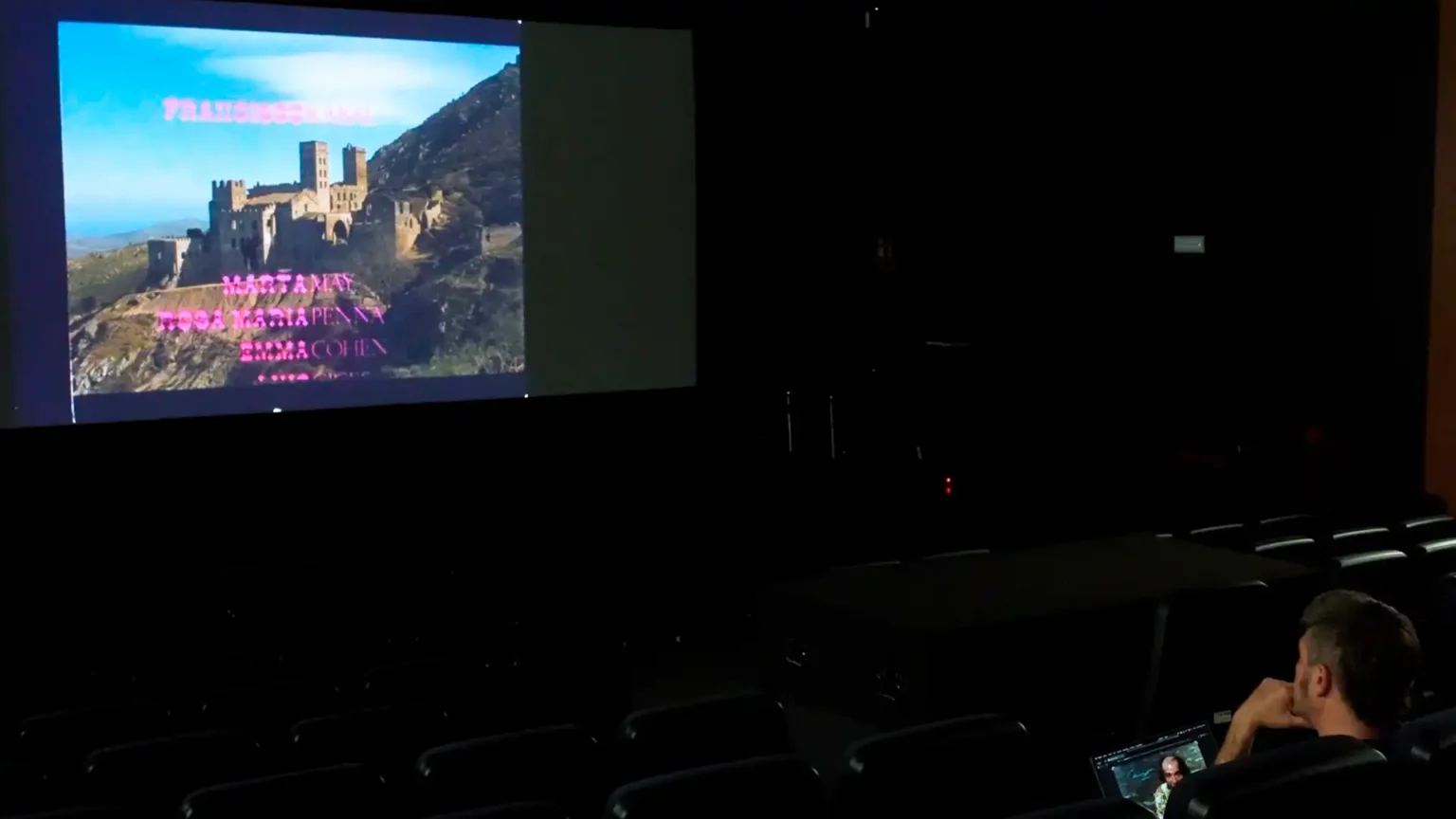
Working with color is a meticulous process that follows a highly structured workflow. In the case of Cabezas cortadas, before adjusting a single digital parameter, the colorist screens a DCP (Digital Cinema Package) of the newly scanned raw material on a large cinema screen, without sound, allowing complete focus on the image. This initial viewing helps identify defects and determine whether the overall image tends toward warmer or cooler tones. Following this visual assessment, the work is divided into two main stages.
Primary correction: Exposure, midtones, highlights, and shadows are balanced shot by shot to ensure visual consistency and seamless continuity of light and color between the shots within each scene.
Secondary correction: The finer adjustments are carried out at this stage. The colorist can isolate specific areas of the frame —such as the background, the sky, or skin tones— and make highly precise refinements.
Visual Archaeology: Recovering, Not Reinventing
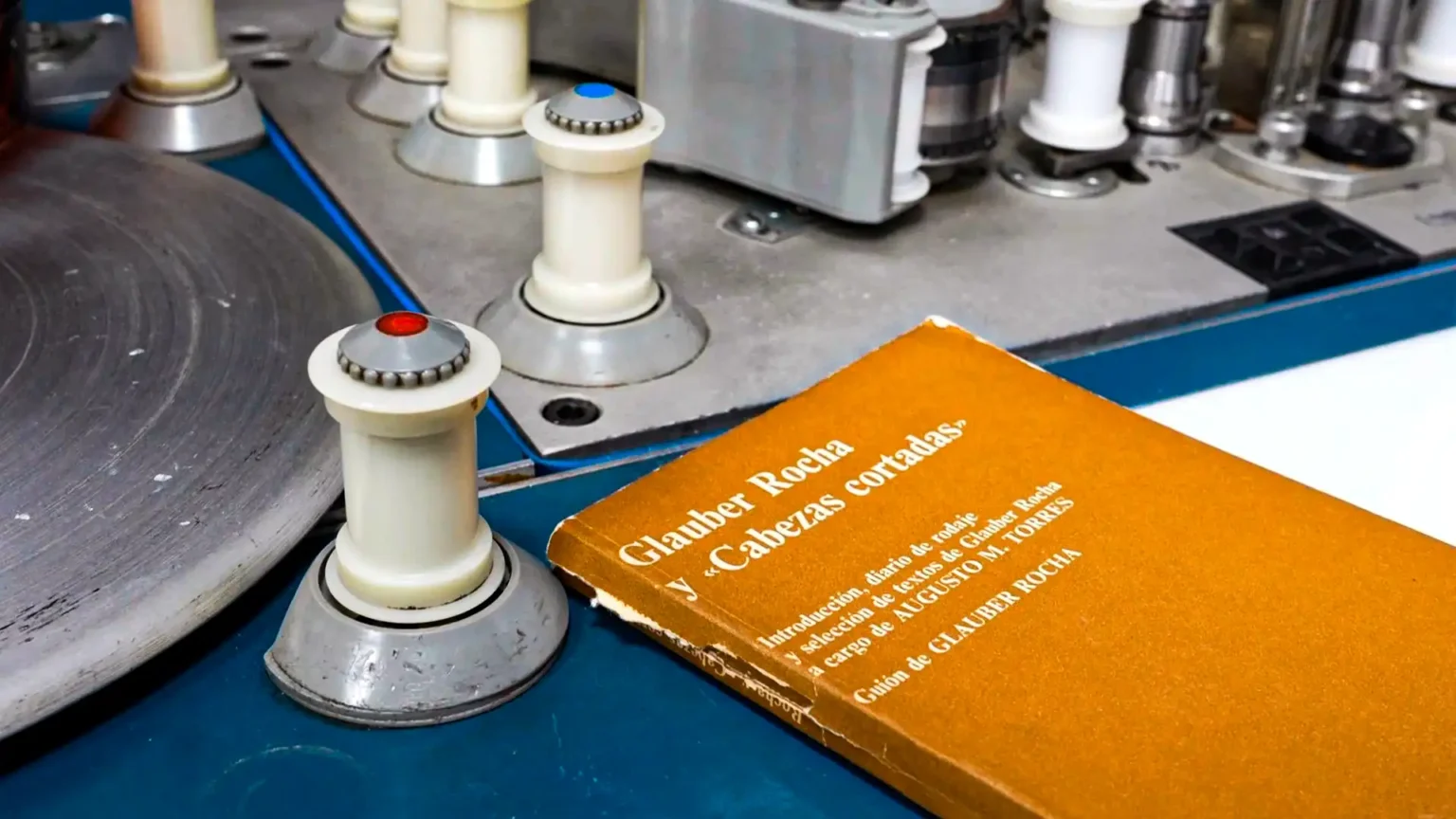
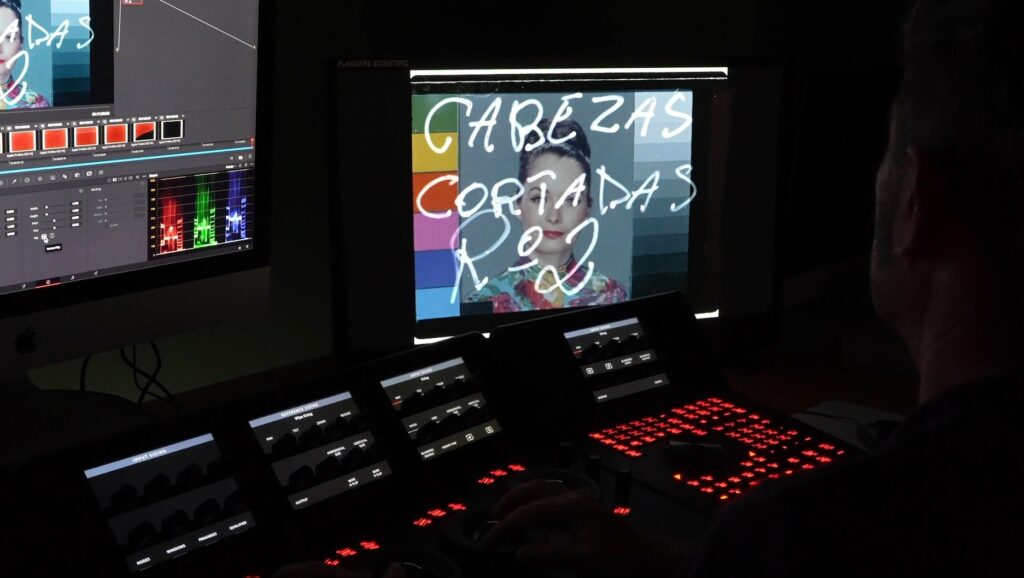
The golden rule in the restoration of Cabezas Cortadas is clear: the goal is to recover, not to invent. But where does the colorist draw his references from if director Glauber Rocha is no longer here to oversee the work? To that end, an in-depth historical and aesthetic investigation has been conducted into Rocha’s creative intentions.
The scanned digital files themselves also provide invaluable information. By identifying the original film stock and emulsion, the colorist can accurately determine the film’s natural color range. In the case of Cabezas cortadas, the restoration has been carried out using an uncompressed 16-bit DPX file that serves as a digital clone of the original camera negative, preserving the full depth of its original color information. In fact, the negative still contained the original color chart used during production, an invaluable reference that played a key role in accurately restoring the film’s original colors.
The Digital Operating Room: The Colorist's Tools
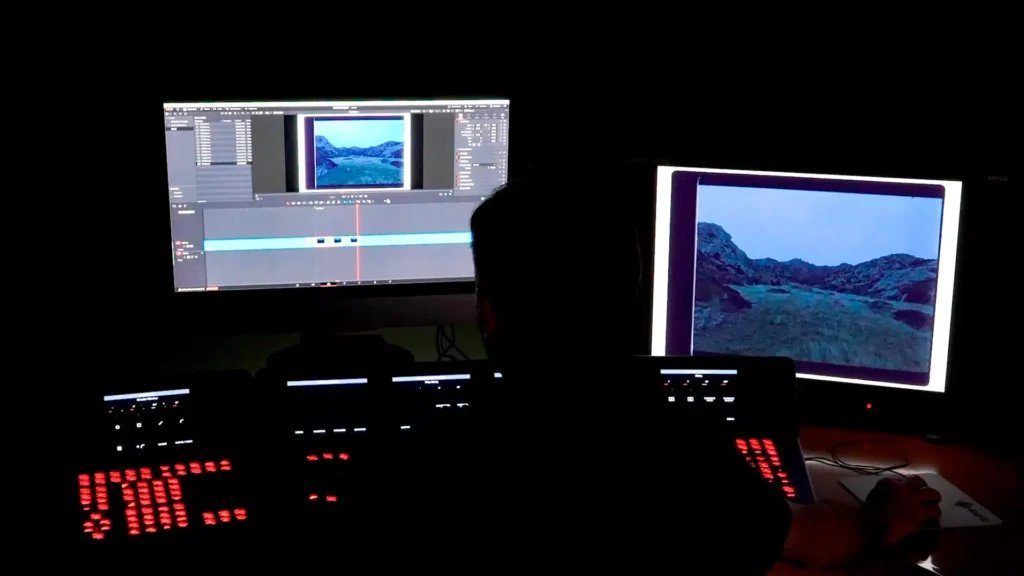
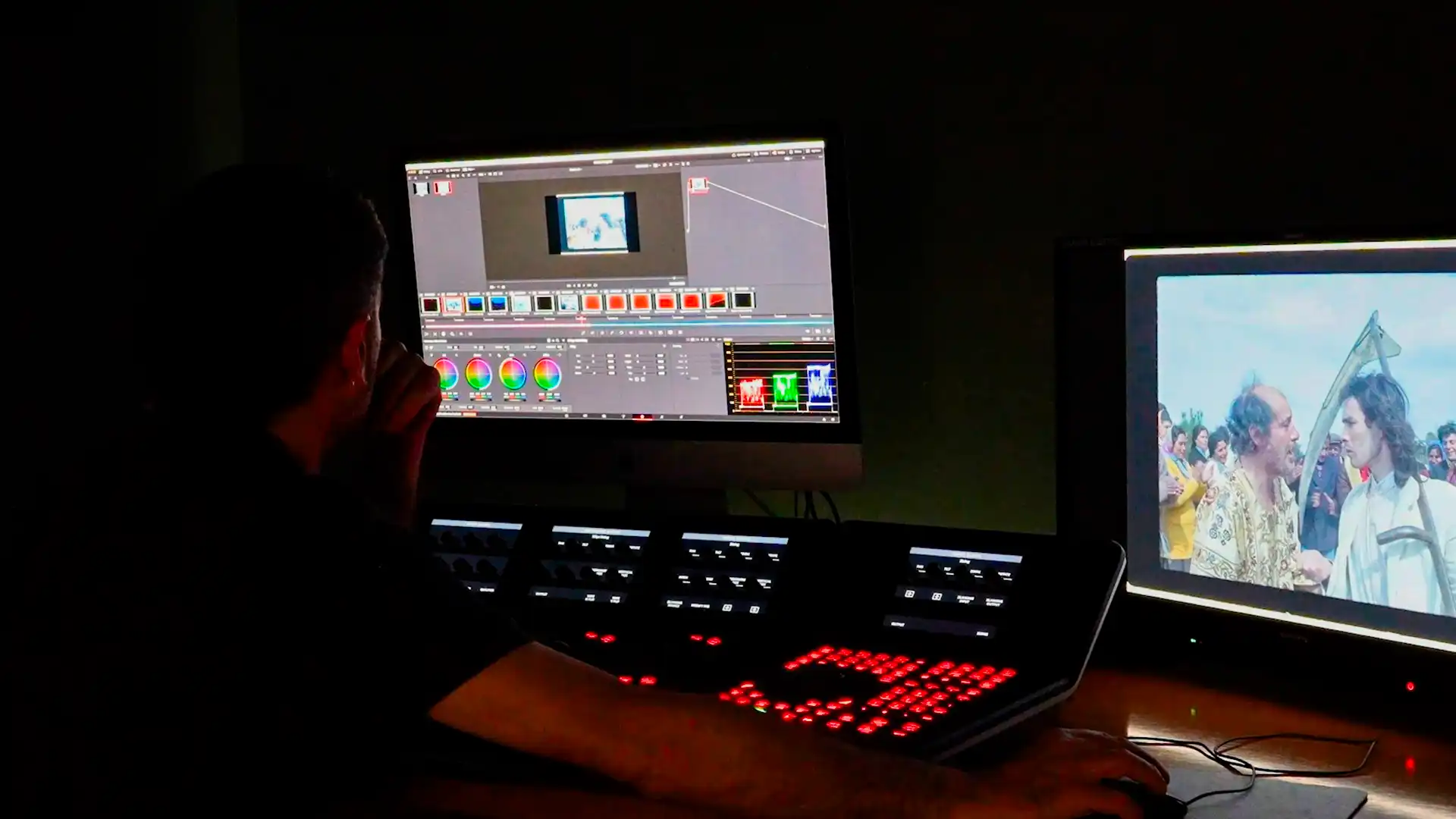
Achieving the precision of a master craftsperson requires a highly specialized working environment. The principal software used to restore Cabezas cortadas is DaVinci Resolve. The colorist works with an Advanced Panel, a professional control surface that provides direct access to nearly every grading tool within the software.
The grading suite is kept completely dark to eliminate any ambient light contamination. The colorist relies on two essential tools: a reference monitor of the highest accuracy, ensuring that the image seen in the grading room will match exactly what audiences will see in cinemas; and scopes, objective monitoring tools that measure color balance, exposure, and luminance distribution, providing data that complements the trained eye.
A Journey Through Time: The Challenges and Final Result of Cabezas cortadas
Photochemical film is an organic medium and, over time, becomes chemically unstable. One of the most serious forms of deterioration is color fading. The degradation of acetate film stock can also produce high levels of acidity capable of destroying the film’s original colors. The greatest challenge —and, at the same time, the greatest stroke of luck in the restoration of the Cabezas cortadas negative— was discovering that the original camera negative had survived in exceptionally good condition. Thanks to an ultra-high-resolution 6K scan, the colorist was able to confirm that the negative retains such remarkable color depth that it appears almost untouched by the passage of time.
What can audiences expect? Not an artificially modernized version of the film, but the visual aesthetic of 1970 presented at its very best. The restoration has recovered the full richness and vibrancy of the colors captured in the original photography. As Javier Mosqueda explains, seeing close-ups of actors such as Paco Rabal is astonishing: “You look at it and it’s as if it had been shot today […]. On the big screen, the film is going to look incredible”.
DISCOVER MORE ABOUT CABEZAS CORTADAS
A project by: