Inicio » Cabezas cortadas, History and Restoration » From phopochemical to the screen
From photochemical to screen
Cabezas cortadas was originally shot on 35mm film. In order to create a new 4K digital copy of the film, it is essential to digitise the film using a specialised scanner. This work, which involved creating a digital file from the analogue material, was carried out in April 2026 at the headquarters of the distributor Video Mercury Films; specifically at the Cherry Towers laboratories. Here is a step-by-step guide to what this first and delicate phase of film restoration involves:
Preservation of analogue material
Celluloid, or photochemical film, is a highly sensitive material which, over time, undergoes irreversible chemical processes —such as vinegar syndrome or emulsion degradation— that can eventually destroy it and even cause it to ignite. It is therefore essential that analogue material is kept in specialised installations equipped with continuous climate control systems that ensure the ideal conditions of temperature, relative humidity and ventilation to halt its deterioration.
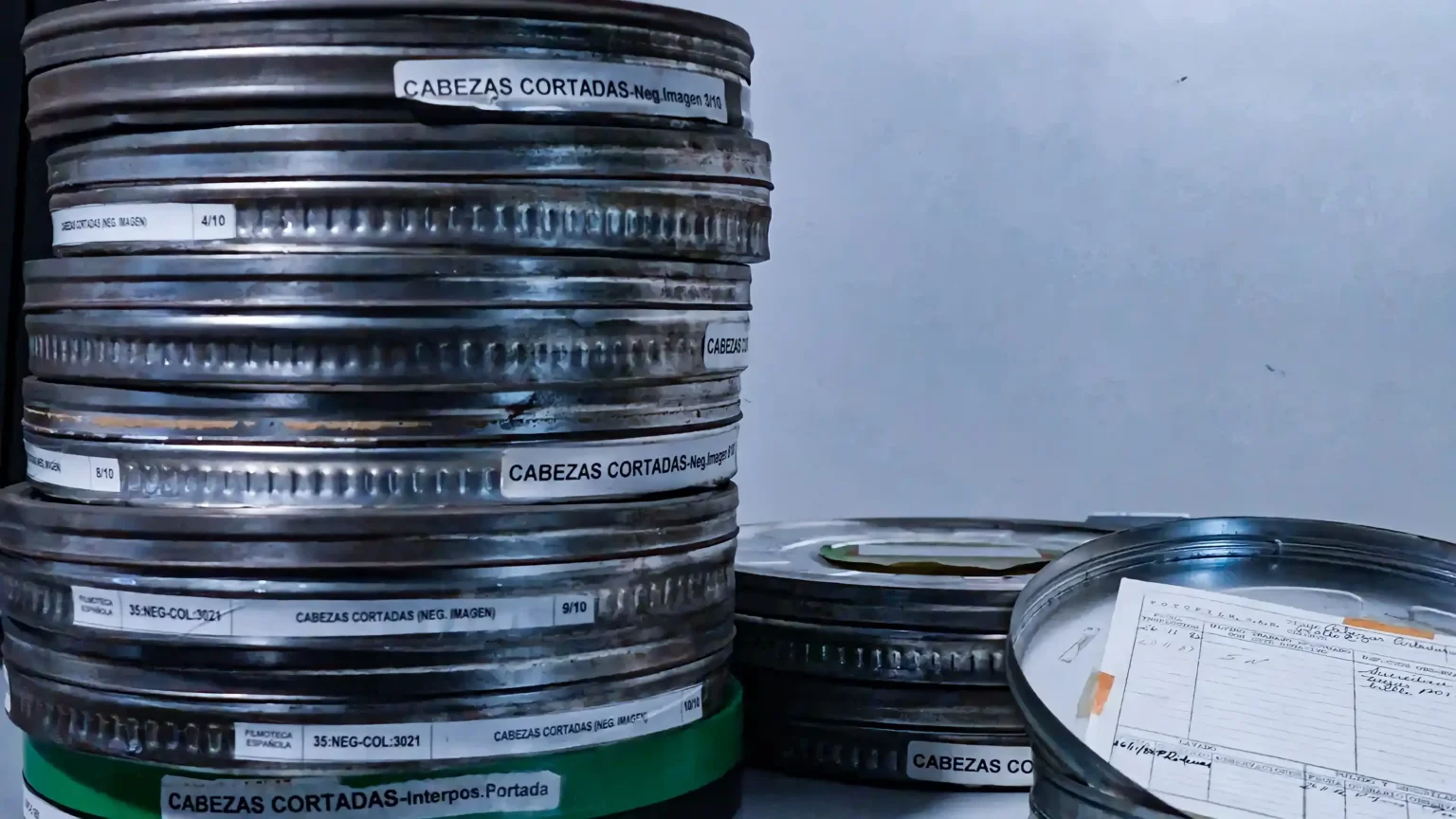
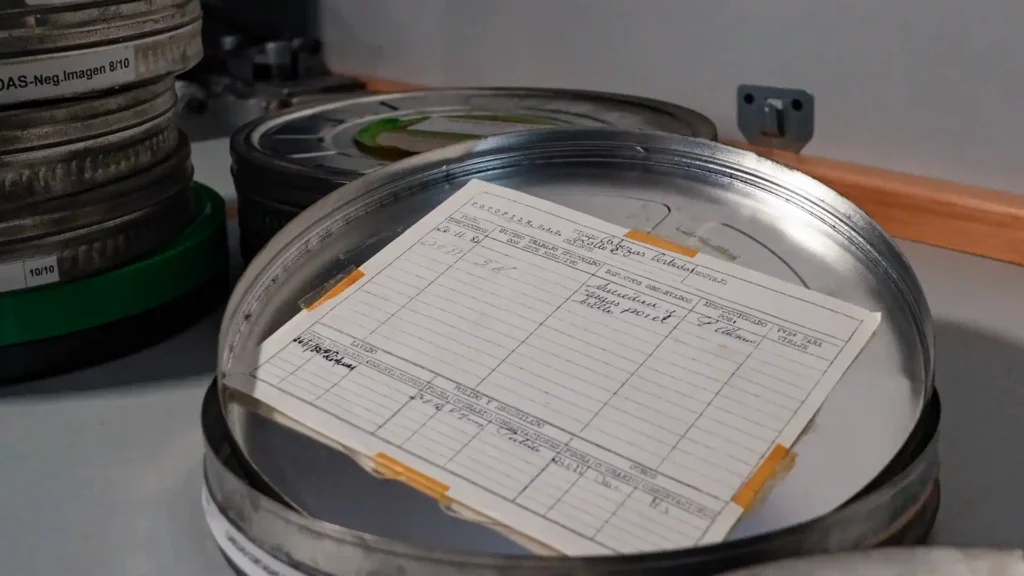
In the case of Cabezas cortadas, the original materials were kept at the Conservation and Restoration Centre (CCR) of Filmoteca Española, a high-security space with strictly climate-controlled underground storage facilities. To access this valuable heritage and begin the restoration, the film is carefully transported in cans to the Mercury Films facilities, where specialists work on it.
Film processing and preparation
Before scanning begins, and depending on the condition of the analogue material, the film may require physical cleaning prior to the digitisation process. This washing removes any impurities that may be present on the film, such as dust spots, fibres, dirt or particles that have become embedded in the emulsion over the decades. To do this, Cherry Towers laboratories use a specially designed film washing machine. The film passes through cotton rollers moistened from isopropyl alcohol reservoirs at a speed of between 10 and 20 frames per second, finishing with a system that blows hot air to dry the film.
Scanning
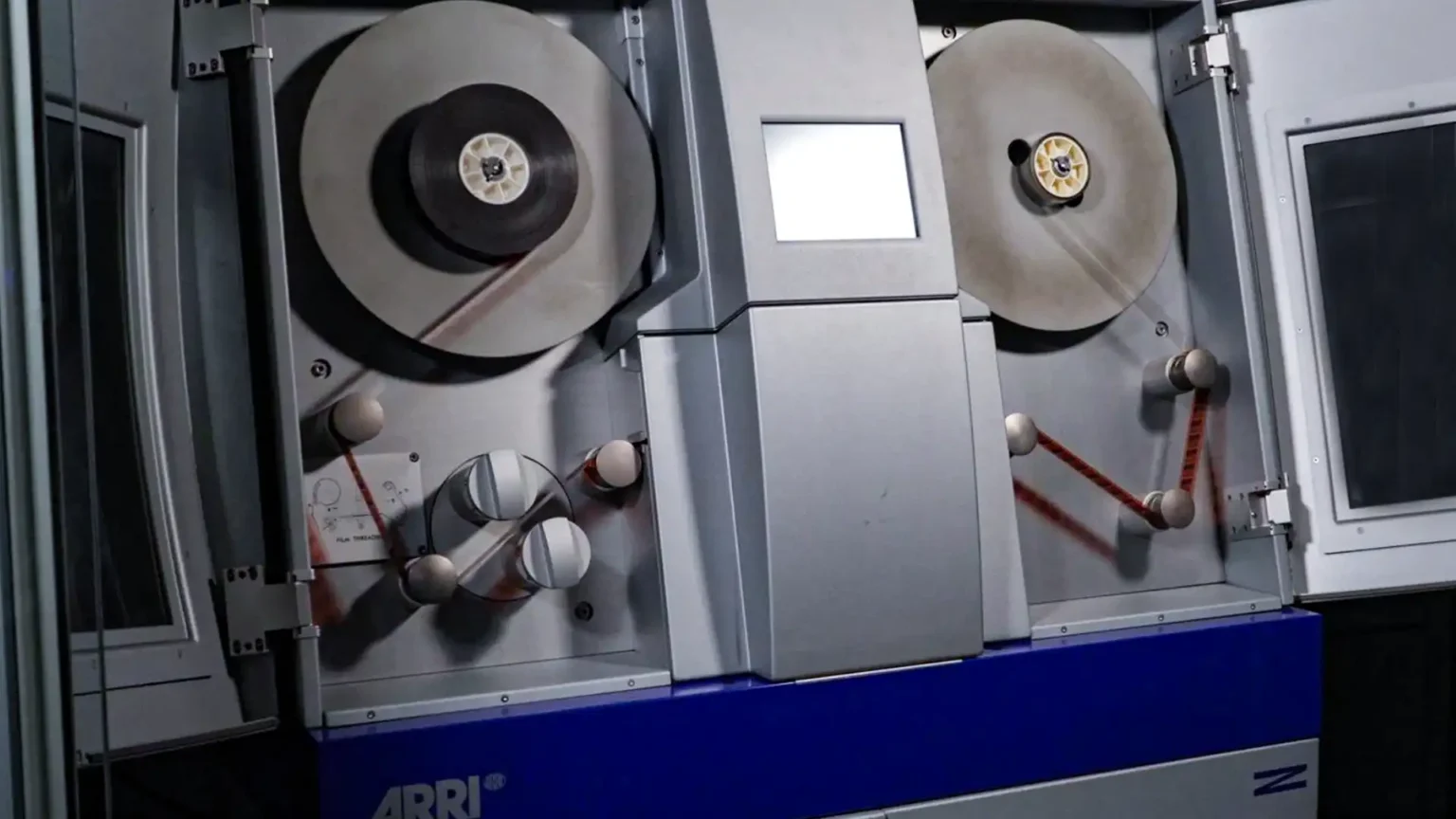
The key part of this phase is the digitisation of the analogue material using the ArriScan scanner. This device does not ‘record a video’, but captures the image by meticulously scanning it frame by frame. The process involves calibrating the machine and projecting a beam of light through the film so that a high-resolution camera above captures the image. It is a slow and exhaustive process: the machine takes between 2 and 2.5 seconds per frame, meaning that a single ten-minute reel can take up to eight hours to scan.
In the case of Cabezas cortadas, to extract the best possible image and sound quality, both the original film and sound negatives have been meticulously scanned in 6K.
16-bit DPX file
The result of the scan is a frame sequence exported in 16-bit DPX (Digital Picture Exchange) format. This rasterised, uncompressed file represents the purest possible digital copy of the film. The DPX format is popular in the film industry due to the specific way in which it stores colour space and colour information.
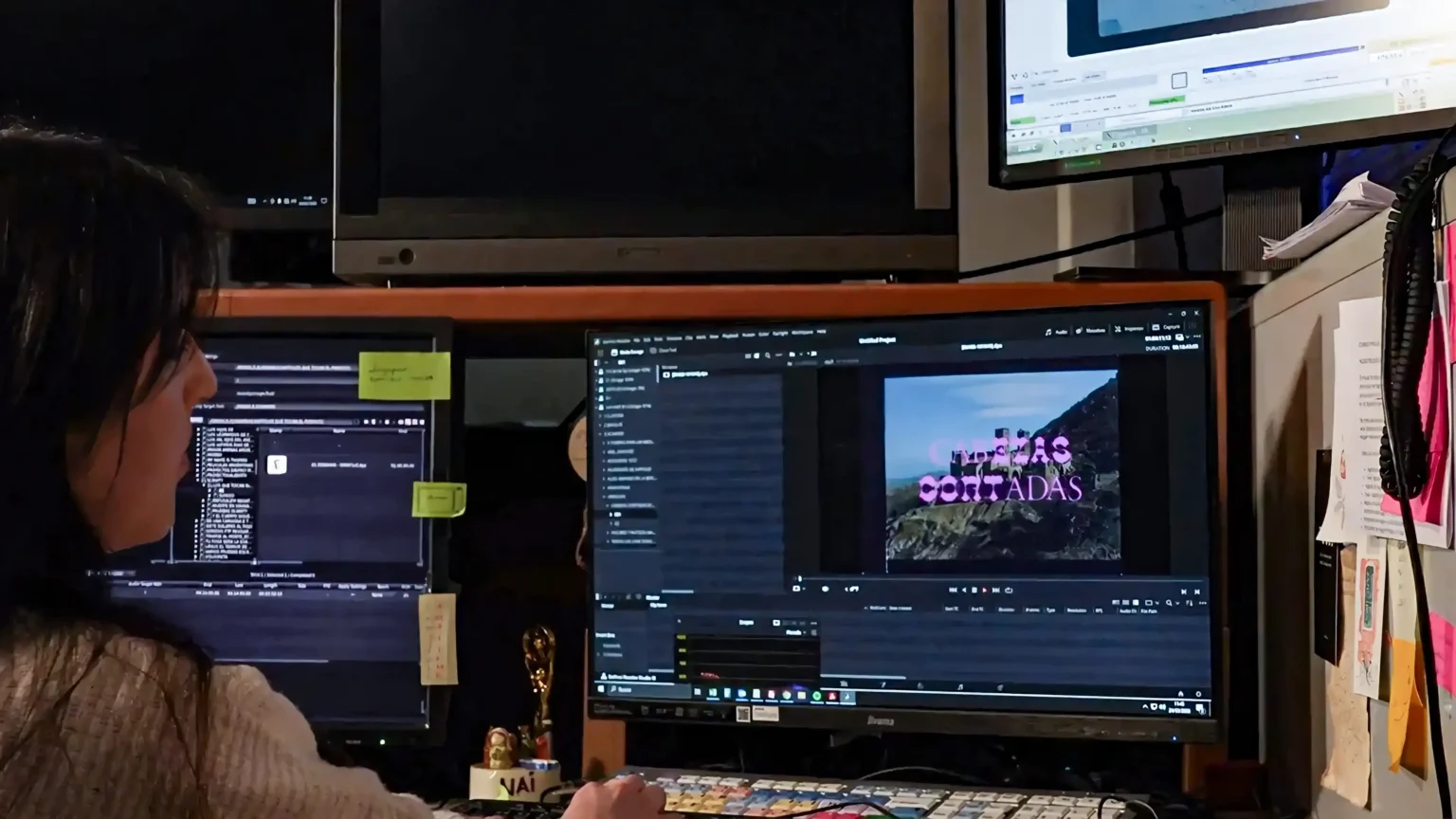
Looking at DPX images for the first time, they may appear blurred or washed out. However, because they are logarithmically designed to contain the full colour density and the extremely wide dynamic range of the highlights and shadows from the original filming process, colourists can grade them later to meet the unique aesthetic requirements of the production.
Benefits of digitisation
The conversion from analogue to digital format not only saves films from imminent physical deterioration, but also offers tremendous benefits for film heritage. Firstly, working with the digital archive means the original photochemical material is handled less, thereby slowing down its physical deterioration. Secondly, it is a minimally invasive and fully reversible process: restorers can modify, clean and colour-grade the digital copy without putting the historical negative at risk.
Finally, digitisation ensures the longevity of the work and drastically facilitates the distribution of the film, allowing these cinematic gems to be screened once again with a quality unthinkable at the time of their original release, via modern cinemas, digital platforms or television. Although digital restoration offers a major advantage in terms of the work’s accessibility, the digital format also presents a number of problems and faces debates regarding its long-term preservation—obsoletion or format incompatibility—.
DISCOVER MORE ABOUT CABEZAS CORTADAS
A project by: