Inicio » Cabezas cortadas, History and Restoration » The Cannes Agreement
The Cannes Agreement
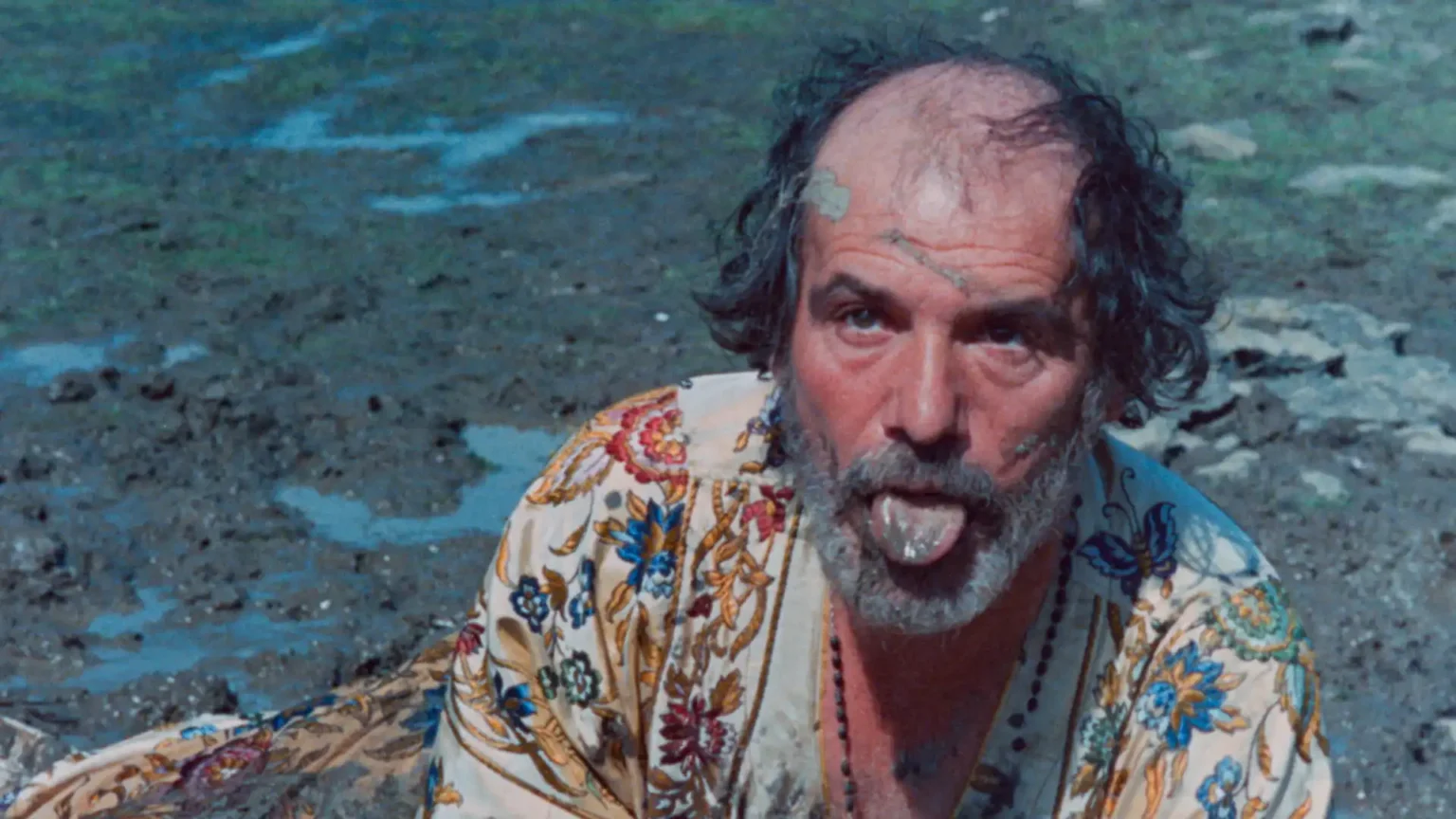
On the afternoon of 7 July 1970, the stalls of the Teatro Victoria Eugenia in San Sebastián held their breath before being shaken by astonishment and controversy. It was the world premiere of Cabezas Cortadas, a cinematic bridge between the Third World and the European avant-garde that the director, Glauber Rocha, constructed with complete creative freedom to stage, and predict, "the funeral of dictatorships"[1]; including Franco’s regime, which, paradoxically, helped to finance its production. However, the pillars of that allegorical work were not built on the Basque coast, but a year earlier, under the golden light of the Croisette.
It was May 1969 and the Cannes Film Festival was a hive of cinephilia, on the verge of elevating the Brazilian genius, just days away from officially awarding him the prize for Best Director for his film Antonio das Mortes[2]. The brilliance of this international triumph contrasts with the suffocating reality he was leaving behind: hounded by censorship, arrests and the fierce repression of the military dictatorship, the filmmaker had been forced to leave his native country to embark on a journey abroad that would soon lead to exile[3][4]. Navigating between the pinnacle of his prestige and the abyss of exile, the Catalan distributor Pere I. Fages, from the production company Filmscontacto, crossed his path to tempt him with an offer of $100,000 and total freedom to shoot his next film in Spain[2]. At that time, Cinema Novo, which had emerged in Brazil, had shook the moral and visual consciousness of European audiences. All the rage amongst critics on the Old Continent, this visceral film movement—which sprang from a culture of ‘hunger’ and reacted politically and narratively to colonialism and imperialism, whilst not shying away from criticising the Hollywood commercial model—had Rocha as its foremost theorist and practitioner[5] [6]. However, its consolidation was a collective effort supported by other creators such as Nelson Pereira dos Santos, Ruy Guerra and Joaquim Pedro de Andrade[7], whose presence at film festivals—such as Cannes, Berlinale and Venice—amplified the resonance of this revolution in Europe[8]. The narrative and aesthetic revolution led by the self-proclaimed ‘Third World Filmmaker’[9] was precisely what producer Ricardo Muñoz Suay was looking for. Hardened by a thousand political battles and with a contact list featuring highly influential names, he acted as a true power behind the scenes within the national film industry. Having initially launched the careers of masters such as Juan Antonio Bardem and Luis García Berlanga, and facilitated Luis Buñuel’s return to Spain to shoot Viridiana (1961), his arrival in Catalonia as executive producer of Filmscontacto in 1967 marked a turning point[2].
He became the mastermind and promoter of the Barcelona School of Film, a name he helped to popularise—even going so far as to pit it against Madrid’s New Spanish Cinema in the media—: whilst the filmmakers focused on the artistic side, Muñoz Suay took it upon himself to resolve the constant internal conflicts and serve as an inspiration for professionalising their work. Determined to expand the company’s horizons beyond the personal projects from which it had started, he strove to give the country’s most independent cinema a worthy platform on the international circuit, and found in the movement emerging from across the Atlantic the ideal opportunity to achieve this.
Failed projects and production company alliances
It was the 1960s and, after decades of isolation, repression and censorship, Franco’s regime was beginning to show slight cracks, thus ushering in a period of openness designed to improve its international image. Muñoz Suay seized the opportunity to breathe new life into the country’s film industry, enhance its prestige and make it more profitable[10].
Keeping a close eye on the generation of filmmakers making a big impact in Latin America, the strategist of Barcelona’s bohemian film scene worked to forge links with that avant-garde world. Aware of the potential of such exchanges, he made contact with one of the most influential figures: Glauber Rocha, who would go on to shoot a film in Spain two years later.
The Brazilian filmmaker’s arrival on the Iberian Peninsula was preceded by a failed project led by Jacinto Esteva, the driving force behind the aforementioned Barcelona School of Film and founder of Filmscontacto. The production company had planned to shoot his film, Ícaro, but Esteva’s free-spirited lifestyle was hardly compatible with filming; even less so when the director was in the habit of spending his nights partying and didn’t get up until well after midday[2][11].
The director’s habits put at risk the investment made by Filmscontacto —whose financial situation was not exactly stable— and Profilmes, the film division of the holding company headed by Juan Palomeras —who had links to Opus Dei—. The latter had become involved in the production of Ícaro through Muñoz Suay, who combined his executive role at Esteva’s company with that of an advisor at Profilmes.
Muñoz Suay was paying a heavy price for his attempt to save the production of Ícaro by bringing Profilmes into the equation. Following the forced cancellation of the project—a decision taken to prevent the investors from losing their capital—he acted quickly to transfer the commitments from the failed feature film, as well as the contract signed with Paco Rabal, to another project.
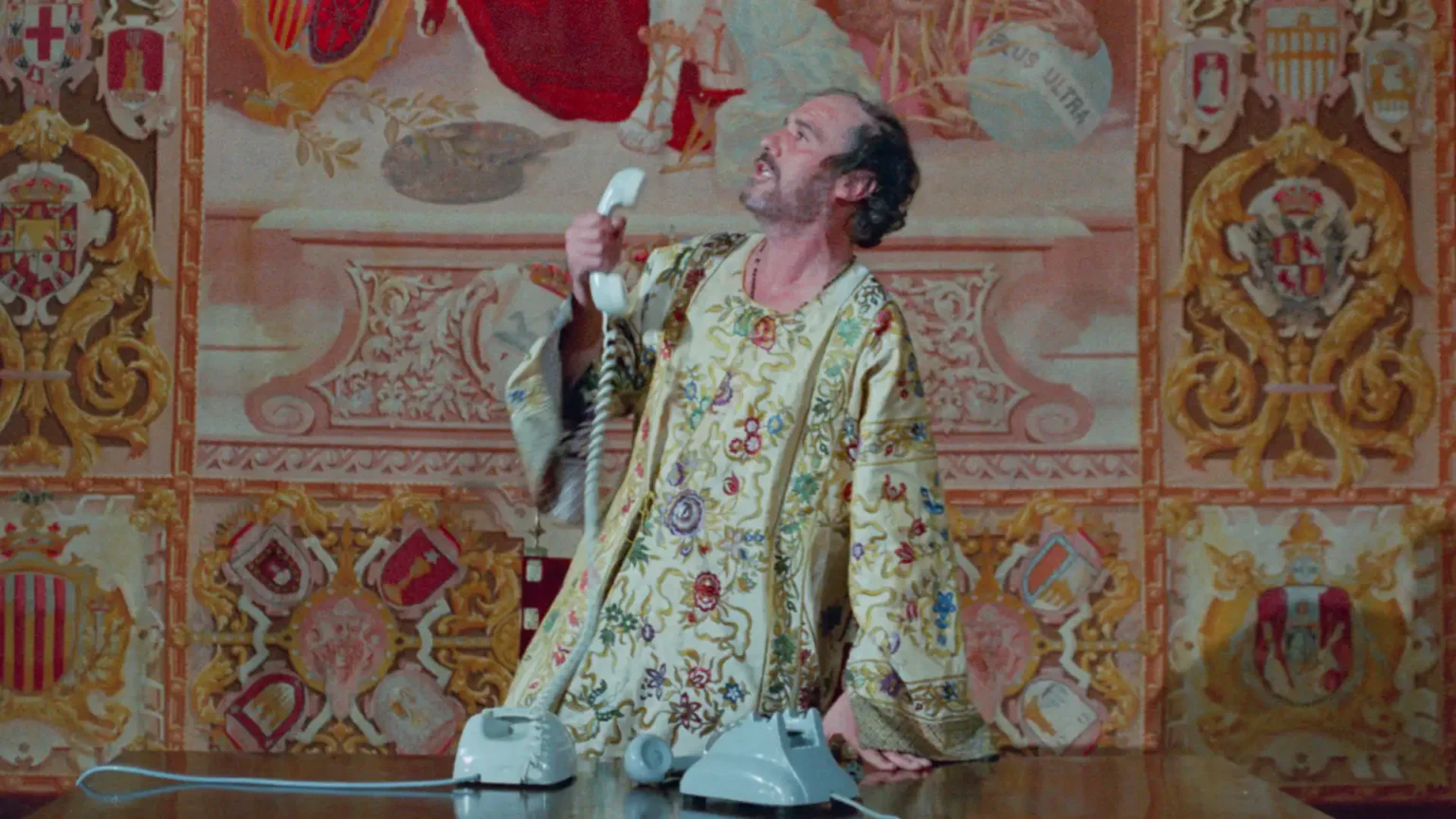
It was during this hiatus that Ícaro’s resources were used to consolidate the film that Pere I. Fages had offered to produce for Glauber Rocha. Both projects had coexisted throughout the autumn and, several months after that agreement in Cannes—valued at $100,000—a three-way co-production deal was reached on 23 October 1969 between Filmscontacto, Profilmes and the company linked to Rocha (Mapa Filmes); the final sum amounting to over 14.3 million pesetas—which would have been equivalent to more than $200,000 at the time. It was the definitive collapse of Ícaro that forced Muñoz Suay to pour all the capital he had saved and the entire stake of Paco Rabal—who was originally going to star in both films—exclusively into Glauber Rocha’s project, which by then had changed its title several times.
The dance of ideas that ended in Cabezas cortadas
Returning to the harshest and most violent approach Cinema Novo had taken to the tragic and oppressive reality facing Latin America, Glauber Rocha explored a new artistic revolution through which to confront the injustices and norms of the colonial world via mysticism and irrationality[12][13]. The genius was in the midst of transitioning to this groundbreaking creative phase when he accepted Pere I. Fages’s offer.
In this context of turbulence, Glauber Rocha’s mind began to conjure up visions that would bring his screenplay to life, deciding to draw on the great figures of Hispanic literature for this purpose. This is how the initial filming concepts emerged, centring on free adaptations of Federico García Lorca’s Bodas de sangre, a choice that predictably aligned with his desire to approach cinema from a more poetic and theatrical perspective of tragedy; or Ramón Valle-Inclán’s Tirano Banderas, whose esperpento probably captured his interest through the way it grotesquely distorted reality and approached the decadent figure of the tyrant.
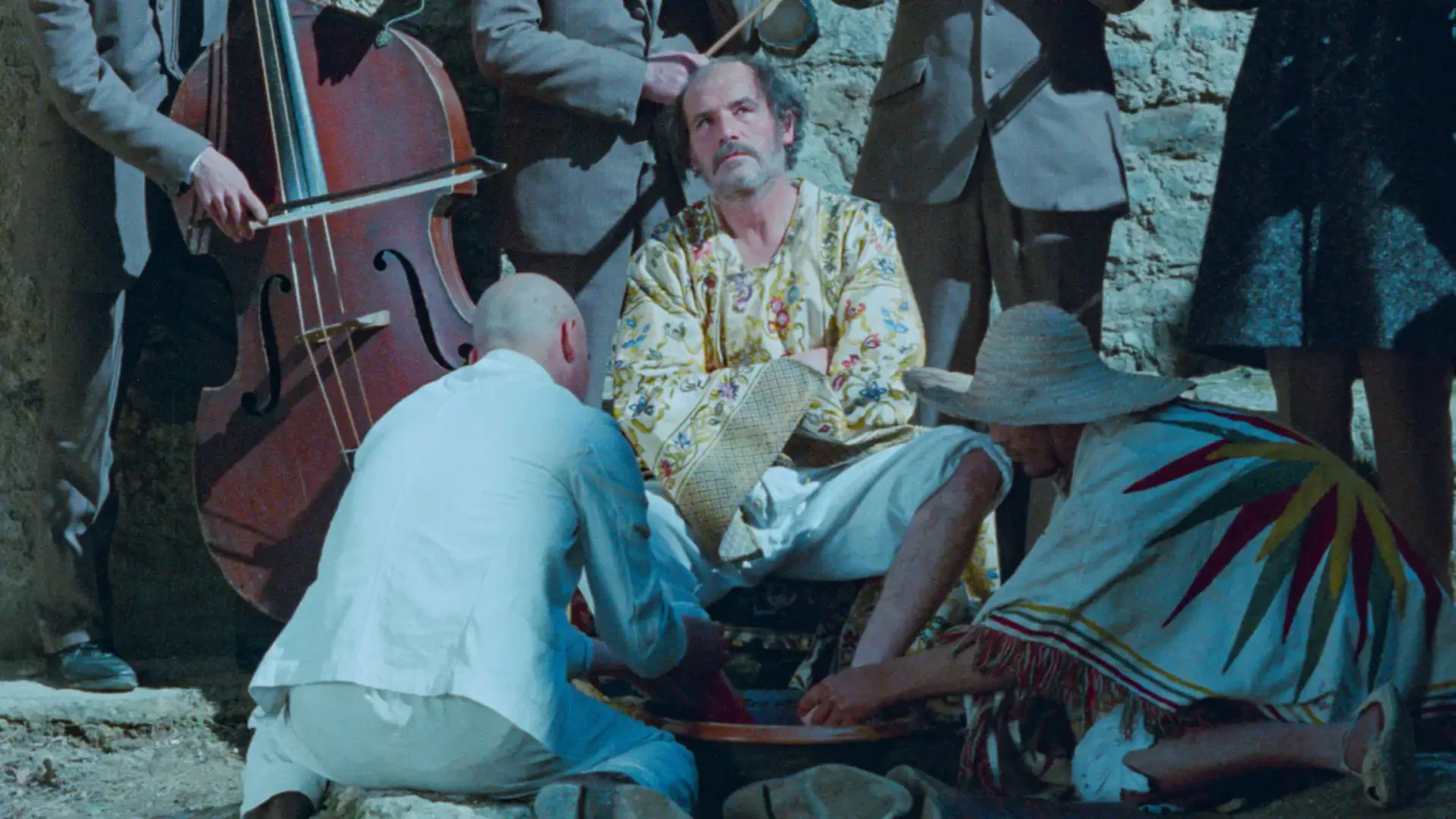
However, Rocha’s obsession with imaginative delirium, whose grandiose fantasies served to vindicate Third World cinema and drive out the imperialist, found an echo in the most famous knight in world literature. In the first week of June 1969, Rocha sent a synopsis of barely five pages to Barcelona, entitled The Testament of Don Quixote, accompanied by the following note:
«This film is freely inspired by the final chapter of Cervantes’ Don Quixote. […] The film aims to depict the final days of a great man through his mystical, psychological, religious, lyrical and existential deliriums. The character will not be called Don Quixote, and we will know nothing of his name or origins. He has but one point of contact with Don Quixote: like him, our character faced life alone […]»[14].
But this enthusiasm faded just two months later. In August, Glauber Rocha submitted a new fifteen-page script in which the knight from La Mancha had been replaced by the English tragedy, and the madness of power had taken the place of the giants in a work renamed Macbeth 70. The ‘Third World filmmaker’ thus laid a new foundation stone for the delirious work that had emerged from that agreement in Cannes.
Literature
[1] AZEVEDO MAILA, Paulo Roberto de (2018). Glauber Rocha no caminho da televisão. Anos 90, 25(48), 327–349.
[2] RIAMBAU, Esteve (2007). Ricardo Muñoz Suay: una vida en sombras. Tusquets.
[3] GARCÍA, Estevao (2010). Di-Glauber: Un documental onírico. El ojo que piensa. Universidad de Guadalajara, Red Universitaria de Jalisco. https://hdl.handle.net/20.500.12104/88198
[4] ROCHA, Glauber (1975, 13 de diciembre). Carta dirigida a Ricardo Muñoz Suay.
[5] MARTÍNEZ TORRES, Augusto (1981, 23 de agosto). La huella española de un realizador inquieto. El País.
[6] ROCHA, Glauber (1965). Estetyka da fome [Tesis presentada durante las discusiones en torno al Cinema Novo, en ocasión de la retrospectiva realizada en la Reseña del Cine Latinoamericano]. Génova.
[7] SÁNCHEZ, Goar (2022). Tras los pasos de Glauber. Del sertão brasileño a los Andes venezolanos. Una mirada cinematográfica. UNEARTE.
[8] MARTÍNEZ TORRES, Augusto (2005). Buñuel y sus discípulos. Huerga y Fierro Editores.
[9] GLAUBER, Rocha (1970). Cabezas cortadas. Un film de Glauber Rocha [Dossier de prensa oficial de Cabezas cortadas]. Profilmes.
[10] RIAMBAU, Esteve (1970).Ricardo Muñoz Suay: una vida en sombras. Biografía. Tusquets. pp. 453, 467-469
[11] RIAMBAU, Esteve, y TORREIRO, Casimiro (2006). La escuela de Barcelona: el cine de la “gauche divine”. Anagrama
[12] MARTÍNEZ TORRES, Augusto (1971). Glauber Rocha y “Cabezas cortadas”. Anagrama
[13] ALMEIDA BRASIL, Marcus Ramusyo de (2021). Cabeza(s) cortada(s), poder e poética de um cineasta latino-americano à deriva. TSN. Transatlantic Studies Network. Revista de Estudios Internacionales. Vol.6, Nº. 12. pp. 165-171
[14] RIAMBAU, Esteve (2007). Ricardo Muñoz Suay: una vida en sombras. Biografía. Tusquets. pp 459