Inicio » Cabezas cortadas, History and Restoration » From Macbeth 70 to Cabezas cortadas
From Macbeth 70 to Cabezas cortadas
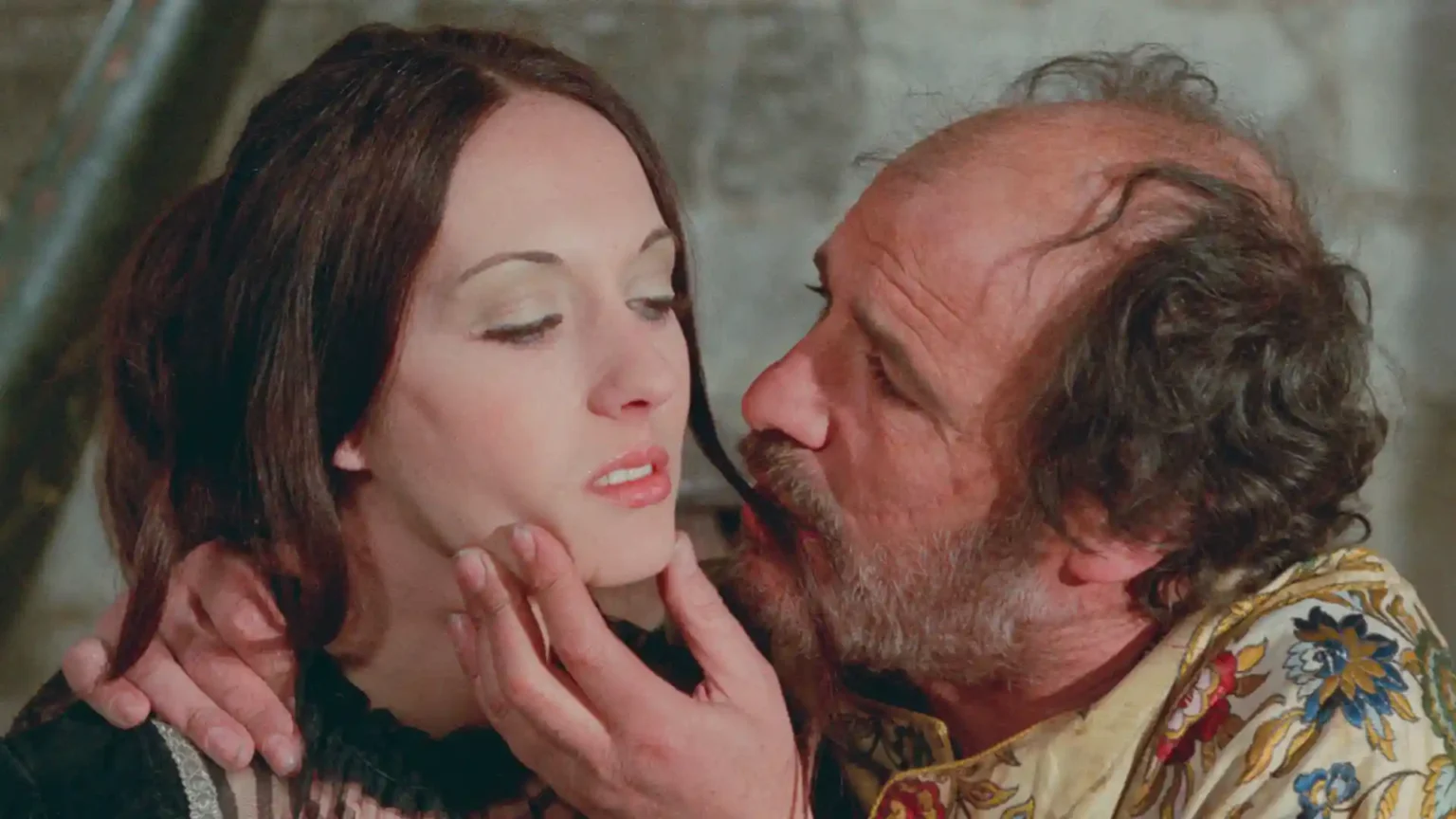
«It is a tale told by an idiot, full of sound and fury, signifying nothing». When Paco Rabal's broken voice intoned this bitter paraphrase of Shakespeare's celebrated quotation to the rhythm of a bolero, the audience gathered at San Sebastián's Victoria Eugenia Theatre erupted into untimely laughter and jeers[1][2][3][4]. Thus concluded the world premiere of Glauber Rocha's controversial and radically free adaptation of the tormented and blood-soaked Scottish king. Originally conceived under the title Macbeth 70, the film would ultimately reach the screen as Cabezas cortadas.
To arrive at this tragedy emerging from Shakespeare’s mist, the Brazilian filmmaker’s creative imagination had wandered through the Iberian literary tradition in search of the spark that would set his cinematic revolution in motion through theatricality and the aesthetics of the esperpento. His imaginative wings first hovered over Federico García Lorca’s Bodas de sangre and Ramón del Valle-Inclán’s Tirano Banderas, before briefly coming to rest upon the deliriums of the world’s most celebrated knight in a five-page typed synopsis entitled El testament de Don Quijote[2][5].
Rocha would eventually turn towards British shores, where he fused the great myths of the Old Continent with a far more personal vision of Cinema Novo, one that abandoned the aesthetics of hunger in favour of mysticism and hallucinatory dreamscapes[6][7].
After discarding the brief draft inspired by the adventures of the Knight of the Sorrowful Countenance, Rocha found in the Bard of Avon the ideal literary disguise through which to give life to the tyrant who would inhabit his most radical film. Under the title Macbeth 70, he conceived a screenplay in which the madness of power hid behind an Elizabethan tragedy that he transformed into mockery once it had passed through his own creative filter[3][5][8]. Through this framework, the leading figure of Cinema Novo orchestrated what he envisioned as a merciless “funeral of dictatorships”[9], a metaphor directed not only at Latin American tyrants but also at General Franco. Presenting the project under the title Macbeth 70, disguising it as an innocuous and highly personal adaptation of Shakespeare, became the perfect stratagem for a filmmaker of openly marxist convictions to secure official approval of the screenplay and obtain the prestigious classification of “Special Interest”[5] from the Spanish authorities. This extraordinary act of camouflage guaranteed substantial state funding, allowing the Franco regime—blindly and paradoxically—to finance with its own resources an allegory against authoritarianism.
An english myth reimagined through Glauber Rocha's Cinema Novo
Concerned with the turbulent political history of Latin America, Glauber Rocha channelled this obsession through his artistic and cinematic work throughout the 1960s. His anti-imperialist and anti-authoritarian rhetoric permeated the acclaimed Terra em Transe (1967), finding its continuation in Cabezas cortadas[3][10]. Indeed, both films share the same geographical umbilical cord: the fictional country of Eldorado, where Latin American dictatorships and oppression come to life on screen as a means of dissecting the continent’s political realities.
Within this context of creative exploration, and following the commitment already made by Pere I. Fages and Ricardo Muñoz Suay, Rocha abandoned his preliminary proposal centred on Don Quijote in favour of Shakespeare’s Scottish king. Thus, in August 1969, the production company Filmscontacto received a screenplay of barely fifteen pages outlining the framework of Macbeth 70[1][5], now focused on the story of Manuel Prado Díaz II.
A former king of Eldorado, this Latin American dictator has gone into exile in an unspecified European country, haunted by remorse and relentlessly pursued by a mystical shepherd. Shakespeare’s tragic antihero is replaced by the moribund and cynical Díaz II, who awaits death in his crumbling castle. Likewise, the ambiguity surrounding the film’s setting concealed a poisoned barb: although never explicitly stated, that country was, in all likelihood, Spain.
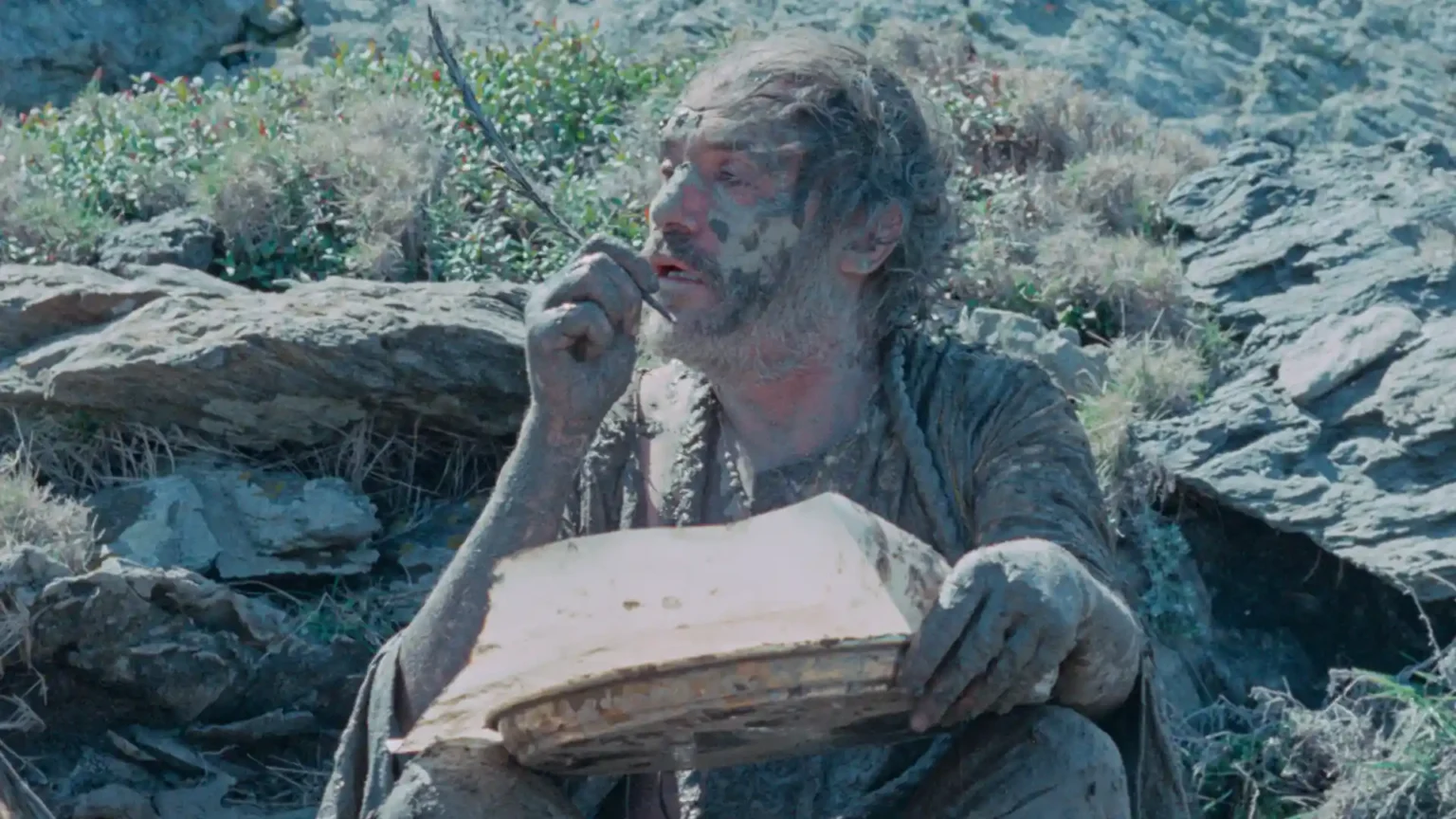
On the page, the similarities to—and departures from—Shakespeare’s tragedy were as evident as they were deliberate. Direct references to the English play survived in the version submitted to the censors, to the extent that the protagonists appeared under names such as “King” and “Lady Macbeth”[11]. Rocha appropriated this material in order to reshape it into a grotesque farce. Drawing upon the surrealism of Luis Buñuel and the labyrinthine imagination of Jorge Luis Borges, he deliberately subverted European and North American cultural codes[8]. In his relentless assault on tyranny, Rocha demonstrated how an English myth could be absorbed into Cinema Novo, whose “irrational magic”[12] shattered the legacy of colonialism.
This confrontation with European—and American—culture is embodied in the gulf separating the grand tragic antihero, Macbeth, from the pitiful tyrant Díaz II. Rocha stripped Shakespeare’s character of every vestige of nobility, reducing him to a cowardly and inept dictator who spends the entire film dressed in a bathrobe.
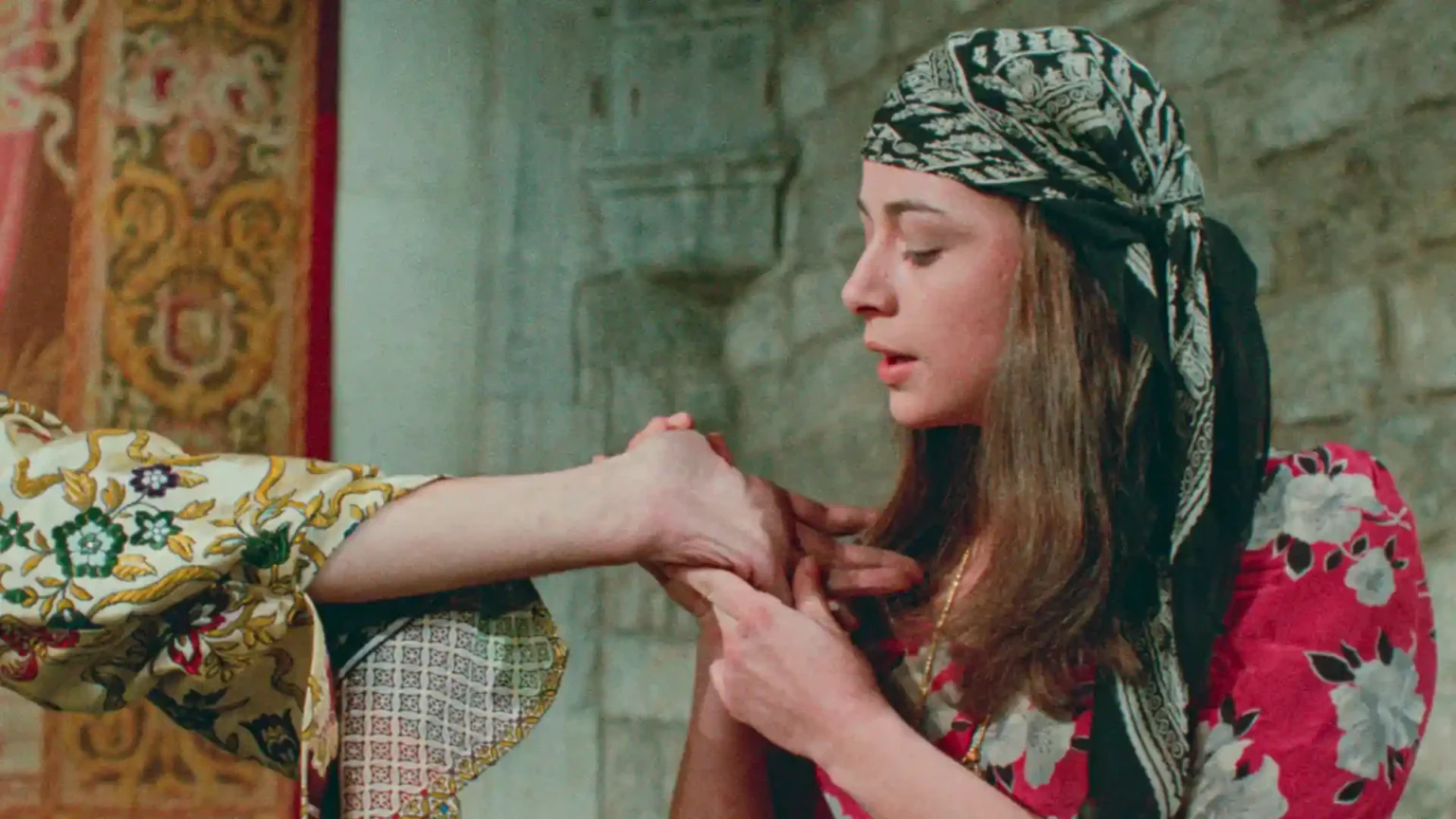
In the film, two iconic moments from Macbeth are explicitly recreated, though filtered through Rocha’s grotesque aesthetic[11]. The first is the witches’ prophecy, here transformed into the prediction of a gypsy woman, who cryptically warns Díaz II that no man born of woman will be able to kill him. The second is the celebrated final soliloquy. Rather than embracing the Scottish protagonist’s existential meditation, Rocha’s dictator flees in terror from his executioner while singing the words that open the present article.
These cryptic lines were already present in the screenplay, yet the rigidity of the written text hardly suited the improvisational and volcanic creative process that characterised Rocha’s filmmaking. As a result, countless sequences were transformed during production. “There was no shooting schedule and no screenplay”, recalled Manel Esteban, assistant director on the film, in interviews conducted for the documentary El viaje de Glauber (Glauber’s Journey, Fermín Sales, 2013), produced within the Master’s Programme in Theory and Practice of Creative Documentary at the Autonomous University of Barcelona.
Film critic and novelist Augusto M. Torres, who worked on Cabezas cortadas as script supervisor, production diarist and emergency screenwriter, likewise witnessed—and later documented—Rocha’s passion for improvisation from the very first days of shooting: «Rocha wants the actors to improvise completely from the written text, a method that does not seem to convince everyone […]. After a rehearsal lasting almost an hour and a half, two takes are filmed, and both are considered usable. They are quite different from one another, especially in terms of dialogue and details. For Rocha this poses no problem whatsoever: every accidental incident, whether visual or sonic, is immediately incorporated into the film and accepted as valid»[3].
The surviving physical copy of the original screenplay—submitted to Spain’s Ministry of Information and Tourism so that the various censorship boards could authorise the text before filming, and now preserved at the General Archive of the Administration (AGA)—perfectly illustrates this process of metamorphosis. On its cover page, the typed title Macbeth 70 has been struck through and replaced, in blue ink and by hand, with the film’s definitive title.
Among the documents preserved in the archive is also the plot synopsis submitted with the application for filming permits, which reads as follows:
«Past, present and future events in MACBETH-70 are continuously intertwined without interruption. Through his songs, the SHEPHERD marks the vicissitudes occurring in KING’s life. The DOCTOR confirms his death. KING wishes to determine both his own destiny and that of others. KING’s children, legitimate and illegitimate alike, summoned by his wife, gather to divide their father’s inheritance. Some murder the others, and battles follow one another in the old manor house. The old bull has died; upon its corpse falls KING, whose final hour has arrived. It will be DULCINEA who sings both the end and the beginning of this story».
A trojan horse for censorship
Far from becoming an obstacle to production, the hermetic nature of Glauber Rocha’s screenplay proved to be the greatest asset of the seasoned producer Ricardo Muñoz Suay. As Head of Production at the then flourishing Profilmes, he knew the workings of the Francoist regime inside out and imposed one non-negotiable condition before giving the project the green light: the final screenplay had to be completely shielded against any difficulties with the dictatorship’s bureaucracy[1][5]. To the Valencian producer’s experience was added the astute cultural pretext under which Macbeth 70 was presented to the authorities. «The film MACBETH-70 is not set in any specific place, nor does its action unfold in any particular historical period. It is a free interpretation of Shakespeare’s Macbeth»[11], declared the project’s deliberately neutral synopsis. Behind this protective shield, Rocha’s criticism of authoritarianism, militarism and tyranny remained elegantly concealed beneath the prestigious mantle of classical tragedy.
The effectiveness of this strategy became evident in the minutes of the Assessment Commission that examined the screenplay on 30 September 1969[13]. Before reviewers Luis Gómez Mesa, Marcelo Arroita and Pedro Rodrigo, the Shakespearean mirage worked perfectly. Gómez Mesa, still impressed by Rocha’s recent triumph at the Cannes Film Festival with Antonio das Mortes, praised what he described as a «remarkable screenplay» featuring celebrated literary figures such as the Quixotic Dulcinea. Trusting entirely in the Brazilian filmmaker’s international reputation, the censor concluded that, «given his career and the full maturity of his artistic abilities, one may confidently expect him to make a film of genuine quality».
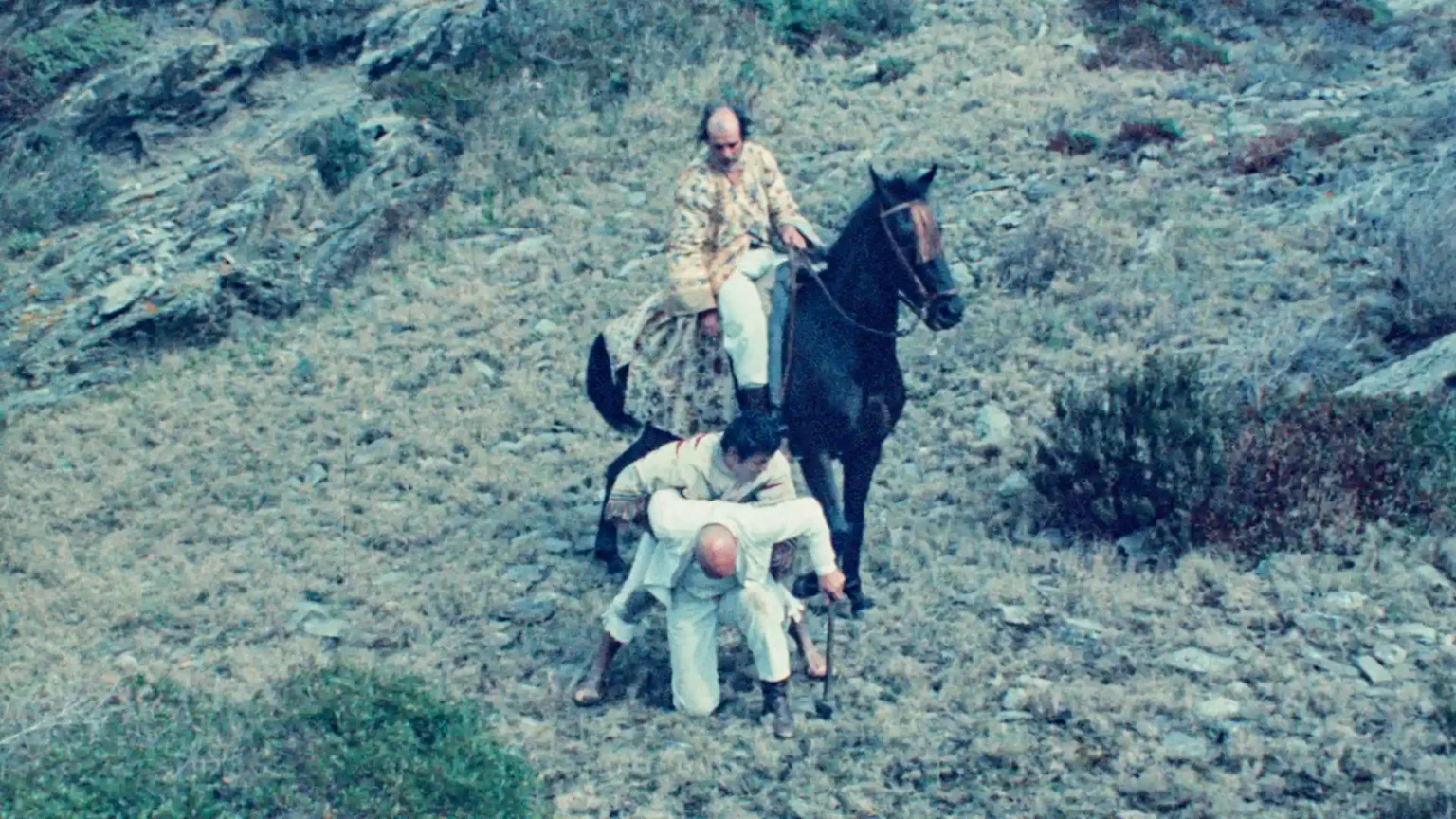
Marcelo Arroita’s report proved even more revealing—and paradoxical. Unlike his colleague, he recognised between the lines that the screenplay constituted a «profound meditation on the themes of power and violence», directly connected to Brazil’s recent political history. Nevertheless, he argued that its elevated intellectual level prevented it from becoming «demagoguery through any unequivocal identification». Beyond recommending greater caution in scene nine —«the sequence involving the horses charging into the crowd of poor people»— the censor ultimately allowed himself to be persuaded by patriotic considerations. The fact that a filmmaker so highly sought after by other European film industries had declared «categorically that Spain was the only country in which he wished to work» justified, in his opinion, granting every possible legal facility. Even so, he could not resist admitting that «Rocha’s chaotic construction and his style of editing are very much not to my taste».
It was by appealing to the regime’s cultural and international vanity that the strategy ultimately succeeded. Muñoz Suay’s mastery in navigating the narrow corridors of the Francoist state apparatus allowed Rocha’s message to pass through intact, giving rise to one of the most remarkable paradoxes of late Francoism: the official authorisation of a profoundly political cinematic bomb conceived within the very womb of the dictatorship[1].
The paradox of "Special Interest" status
Having overcome the hurdle of script approval, the real trial came once the film had been completed and entered the editing room. On 17 June 1970, the Assessment Commission convened to determine the fate of this bewildering cinematic artefact. The board included Carlos Fernández Cuenca, founder and director of the Spanish National Film Archive and the San Sebastián International Film Festival; film critics Pascual Cebollada and Marcelo Arroita-Jáuregui; and members of the clergy tasked with evaluating the moral content of films, among them Reverends Manuel Villares, Marcelino Zapico, and Eugenio Benito, together with other board members. The verdict definitively confirmed the success of Muñoz Suay’s strategy: the film was unanimously approved for audiences over the age of eighteen and, by majority vote, recommended for an advance state subsidy amounting to thirty per cent of its verified production costs[14].
The reports written by the members of the Board of Film Censorship and Assessment now constitute a fascinating historical testimony to the impact of Glauber Rocha’s cinematic universe. Their opinions ranged from one extreme to the other. While Germán Sierfa praised the film’s «remarkable pictorial qualities», another board member dismissed it outright as «a hoax» and «an endless madhouse». Between these opposing views, one reviewer described it as «somewhat unsuccessful, yet unquestionably of artistic distinction, even if it does not reach the achievements of Rocha’s previous works». Father Eugenio Benito, for his part, grasped the deeper significance of the film, defining it as «a violent and perhaps caustic parable about oppressed peoples, articulated through a classical tragedy».
Another particularly revealing report classified Cabezas cortadas as an «auteur film: confusing, obscure and murky; filled with intellectualised symbols that render both its subject and its intentions virtually inaccessible». Ironically, the censor argued that it was precisely «this obscurity and confusion» that diminished the film’s symbolic ambitions and stripped it of the political danger it might otherwise have posed had its themes been presented «in a realistic manner and with a readily perceptible intention». Once relegated to the status of an innocuous work aimed at «minority audiences, Art and Essay cinemas, and film societies», with no prospect of broad commercial appeal, the regime had little hesitation in approving it. At the same time, the report acknowledged that the film was «well directed and visually constructed» and possessed «undeniable quality, originality and cinematic interest for certain sectors, intellectual circles and film schools».
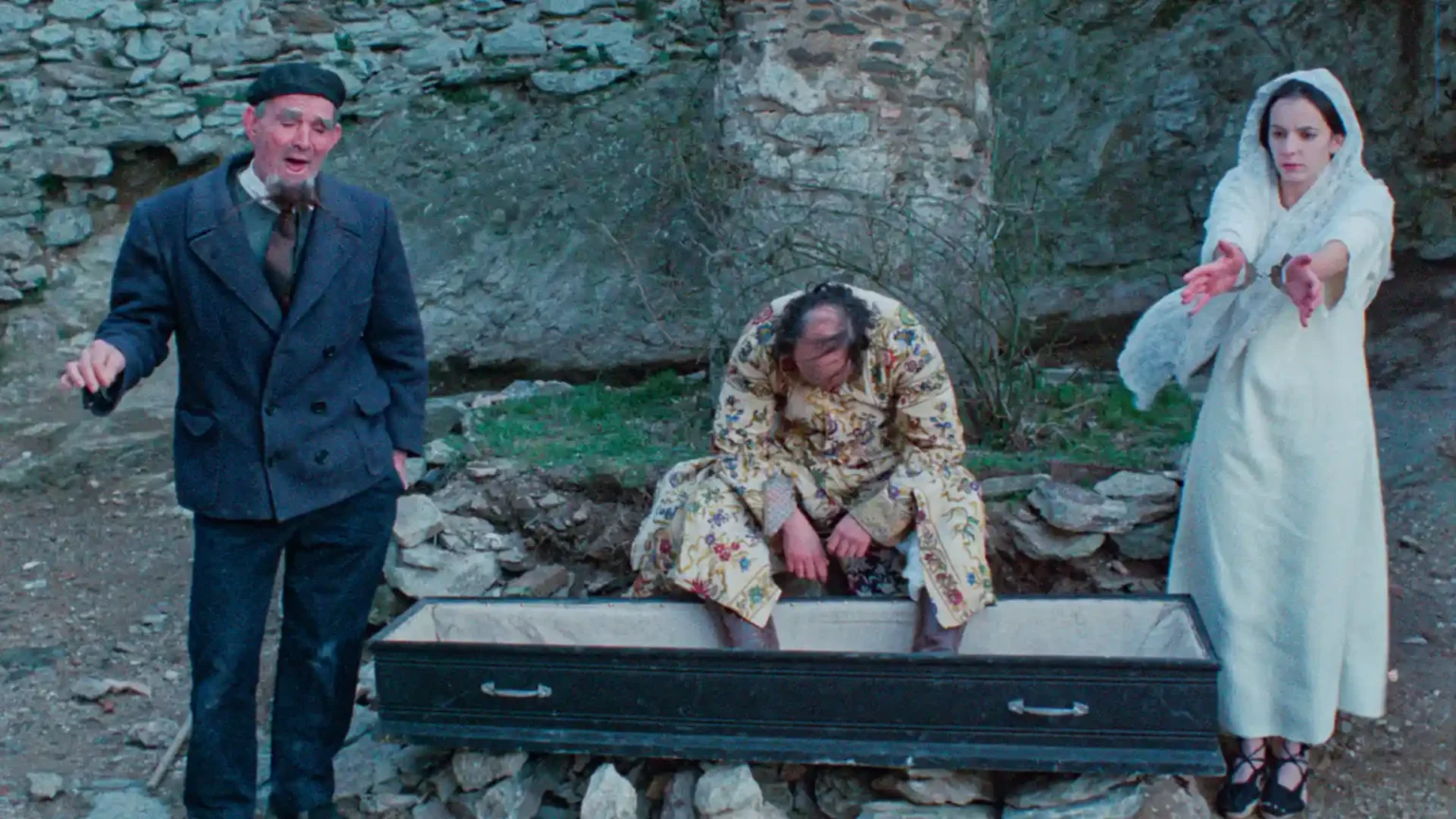
Armed with this official endorsement, a favourable administrative process was set in motion, providing a vital lifeline for the producers. The film embarked upon an extraordinary ascent through the mechanisms of state funding. Its newly acquired designation as a film of “Special Interest” was accompanied by an advance subsidy amounting to thirty per cent of its verified production costs. This was subsequently increased to forty per cent as an ironic reward for having officially represented Spanish cinema at the San Sebastián International Film Festival. The climax of this legal absurdity came two years after the film’s premiere, when the Special Jury ruled that the picture possessed “outstanding artistic merits,” raising the subsidy to the maximum fifty per cent of its verified cost while also granting it the coveted privilege of double valuation for both screen quotas and dubbing licences[13].
The trajectory of Macbeth 70—ultimately released as Cabezas cortadas—thus reveals how a radically avant-garde work, one that would seemingly have had almost no commercial prospects in Spain at the time, succeeded in taking advantage of every extraordinary benefit offered by the regulations of the Ministry of Information and Tourism. By astutely sheltering behind the Ministerial Order of 19 August 1964[15], enacted to promote the development of the national film industry, a Marxist and anti-colonialist filmmaker managed to persuade the Francoist state to finance his dreamlike “funeral of dictatorships”. It was the poetic culmination of a cinematic chimera funded from the very heart of the tyranny it sought to denounce.
Bibliografía
[1] RIAMBAU, Esteve (2007). Ricardo Muñoz Suay: una vida en sombras. Tusquets.
[2] MARTÍNEZ TORRES, Augusto (2005). Buñuel y sus discípulos. Huerga y Fierro Editores
[3] MARTÍNEZ TORRES, Augusto (1971). Glauber Rocha y “Cabezas cortadas”. Anagrama
[4] MARÍAS, Miguel (1970). Crónica de Cabezas cortadas durante su proyección en el Festival de San Sebastián 1970. Revista Nuestro Cine (99)
[5] RIAMBAU, Esteve, y TORREIRO, Casimiro (2006). La escuela de Barcelona: el cine de la “gauche divine”. Anagrama
[6] GARCÍA, Estevao (2010). Di-Glauber: Un documental onírico. El ojo que piensa. Universidad de Guadalajara, Red Universitaria de Jalisco. https://hdl.handle.net/20.500.12104/88198
[7] ROCHA, Glauber (1971).Eztetyka do sonho. [Manifiesto presentado en la Universidad de Columbia]. Nueva York.
[8] CARDOSO, Mauricio y SILVA, Mateus Araujo (2008). Glauber Rocha leitor de Shakespeare: da tragédia de Macbeth à farsa de Cabezas cortadas. En OLIVEIRA, Anabela Dinis Branco de; MOREIRA, Fernando Alberto Torres; MUZART-FONSECA DOS SANTOS, Idelette, y COSTAS ESTEVES, José Manuel (eds.). Diálogos Lusófonos: Literatura e Cinema. Centro de Estudios em Letras, Universidade de Tás-os-Montes e Alto Douro. pp. 157-177
[9] AZEVEDO MAILA, Paulo Roberto de (2018). Glauber Rocha no caminho da televisão. Anos 90, 25(48).
[10] ALMEIDA BRASIL, Marcus Ramusyto de (2021) Cabeza(s) cortada(s), poder e poética de um cineasta latino-americano à deriva. TSN. Transatlantic Studies Network. Revista de Estudios Internacionales. Vol.6, Nº. 12.
[11] MINISTERIO DE CULTURA, AGA, caja 36/05557, exp. s.n.: GLAUBER, Rocha (1969). [Guion cinematográfico entregado a la Junta de Censura]
[12] CARDOSO, Mauricio (2007). O cinema tricontinental de Glauber Rocha: política, estética e revolução (1969-1974) Tesis doctoral. Universidades de São Paulo
[13] MINISTERIO DE CULTURA, AGA, caja 36/05337, exp. 10-A70: Expediente Cabezas cortadas
[14] MINISTERIO DE CULTURA, AGA, caja 36/04425, exp. 10-A70: Expediente Cabezas cortadas
[15] BOLETÍN OFICIAL DEL ESTADO (1964). ORDEN del 19 de agosto de 1964 para el desarrollo de la cinematografía nacional, acordada por la Comisión Delegada de Asuntos Económicos, a propuesta del Ministerio de Información y Turismo. Boletín Oficial del Estado (BOE), publicado el 1 de septiembre de 1964. https://www.boe.es/boe/dias/1964/09/01/pdfs/A11461-11466.pdf
CONOCE MÁS SOBRE CABEZAS CORTADAS Y SU RESTAURACIÓN
Un proyecto de: